Online Parenting Classes | CPRT & Family Support
Join the Child-Parent Relationship Training for
$497
(vs
$997)
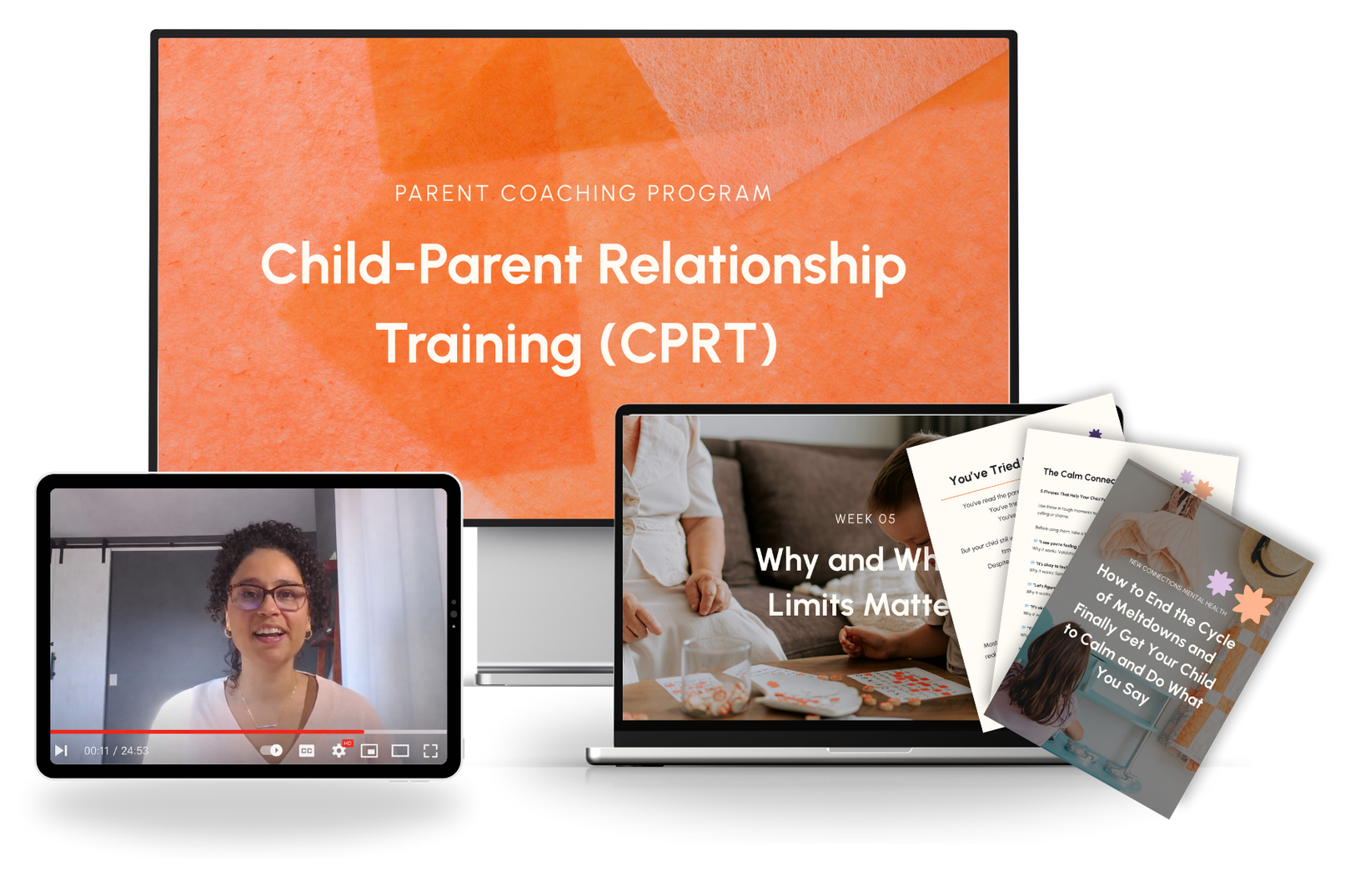
The Child-Parent Relationship Training is a 10-week guided program to help you turn daily meltdowns into moments of connection through play, co-regulation, and relationship-based tools, without yelling, power struggles, or feeling like you’re failing as a parent.
Apply to the program here
Contact Us
We will get back to you as soon as possible.
Please try again later.
This is for you if…
You’re parenting a child between ages 3 and 11 who feels bigger than you expected, big feelings, big reactions, big energy, and you’re realizing that what worked when they were toddlers isn’t working anymore.
You’re deeply exhausted from the heavy meltdowns and you feel like you’re failing as a parent.
The guilt runs deep, you can sense it coming, the big outburst comes out, you try to handle it, breathe and ask for regulation and your child doesn’t follow through, so you snap, you’re doing it again, you’re yelling and you hate yourself for it.
At night you replay the failure in your head, wondering why you had to force control and why parenting feels so hard. Your kid is angry or sad at you and you worry that your connection is drawing apart every day.
You’ve tried sticker charts, timeouts, taking away privileges, long talks, and all the parenting books, but your 4-year-old still collapses on the kitchen floor screaming when you say no, or your 9-year-old explodes over homework like it’s a personal attack.
You’re tired of the daily cycle: meltdowns before school, arguments about every limit, the slams on the door, and by bedtime, you’re drained, snapping, or sitting in guilt wondering if you handled it “wrong.”
You’ve been walking on eggshells around your child’s big emotions, trying to prevent the next outburst instead of actually feeling connected to them.
You want a calmer home and a relationship where your child feels safe coming to you, but power struggles, defiance, and emotional blowups keep getting in the way.
You know deep down your child isn’t “bad” or “manipulative.” You can see they’re overwhelmed. But in the moment, you don’t know how to respond without raising your voice, threatening consequences, or shutting yourself down.
You love your child fiercely. You just want to enjoy them again instead of constantly managing behavior.
You’re scared that if you don’t do anything about it, one day the words “I hate you” from your kid will actually feel true, and you wish you could manage being a parent more easily, but you’re tired of trying and never solving the issue at its core.
That ends today! Because in my Child-Parent Relationship Training (CPRT) we don’t force control over your child’s behaviour, we strengthen the relationship underneath it.
Most people believe that if their child is melting down, defiant, or emotionally explosive, they need firmer discipline, better consequences, or more consistency.
But the truth is this: behavior is communication. And when a child between ages 3 and 11 is dysregulated, what they need most is co regulation and connection, not more control.
When I first started working with families, I saw so many parents doing everything “right.” They were consistent. They had charts. They followed the advice. And they still felt like they were failing. I even found myself frustrated at times, wondering why the strategies were not sticking.
But when I started shifting the focus away from fixing behavior and toward strengthening the parent child relationship through structured play, everything changed.
Parents became calmer. Kids became more regulated. Power struggles softened. And instead of constantly reacting, parents started feeling steady and confident in the moment.
That is the difference.

When you follow this process, you stop yelling, threatening, or shutting down, and start co-regulating with your child.
During special play time, instead of correcting or directing, you sit on the floor and truly be with them. You track what they are doing. You reflect their feelings. And you watch their shoulders soften because they feel understood.
You stop walking on eggshells around big feelings and start feeling equipped to handle them.
When your child grabs a toy aggressively, you calmly say, “You’re feeling really mad. I won’t let you hit. You can pound the pillow instead.” And you hold the limit without anger, without panic, without losing connection.
You stop focusing on short term compliance and start building long term emotional resilience.
Instead of forcing an apology, you guide repair. Instead of escalating when they escalate, you stay steady. Instead of trying to win the moment, you protect the relationship.
You feel hopeful again. You feel connected instead of constantly on edge. Your confidence comes back.
It's time to stop wondering if you are messing this up. Imagine a home that feels calmer, not because your child never has big emotions, but because you both know how to move through them.
It’s time to enjoy parenting again and no longer feel ashamed or alone when your child struggles.
You deserve a home that feels calmer, where relationships feel safer, and your children grow up knowing their emotions make sense and they are deeply understood.
That’s exactly what The Child-Parent Relationship Training helps you do.
Inside this 10 week guided experience, you are not just learning theory. You are practicing real tools, in real time, with real support.
Inside, you’ll find:
10 pre-recorded teaching modules that walk you step by step through CPRT skills, released weekly starting May 4th 2026
Each week focuses on one skill only, from learning how to “be with” your child emotionally, to tracking and reflecting feelings, to structured play session do’s and don’ts, to calm and effective limit setting using the A C T model. This builds confidence gradually instead of overwhelming you.
Homework for a weekly structured special play session with your child
You will implement one 30 minute child led play session per week, practicing only that week’s skill. This is where the shift happens — attachment strengthens, emotional safety increases, and behavior begins to make more sense.
Live weekly group coaching and real time support
Each week we meet live. We review what worked, what felt hard, and I guide you through challenges with clarity and reassurance. You are not left alone trying to figure this out.
Downloadable handouts and simple tools to use immediately
Clear scripts for limit setting. Examples of esteem building responses. Choice giving frameworks that reduce power struggles. Everything is practical and usable the same week you learn it.
Over 10 weeks, you move from reactive and unsure to calm and confident, not because your child stops having emotions, but because you now have a structured, relationship based way to respond to them.
Inside the 10 Weeks
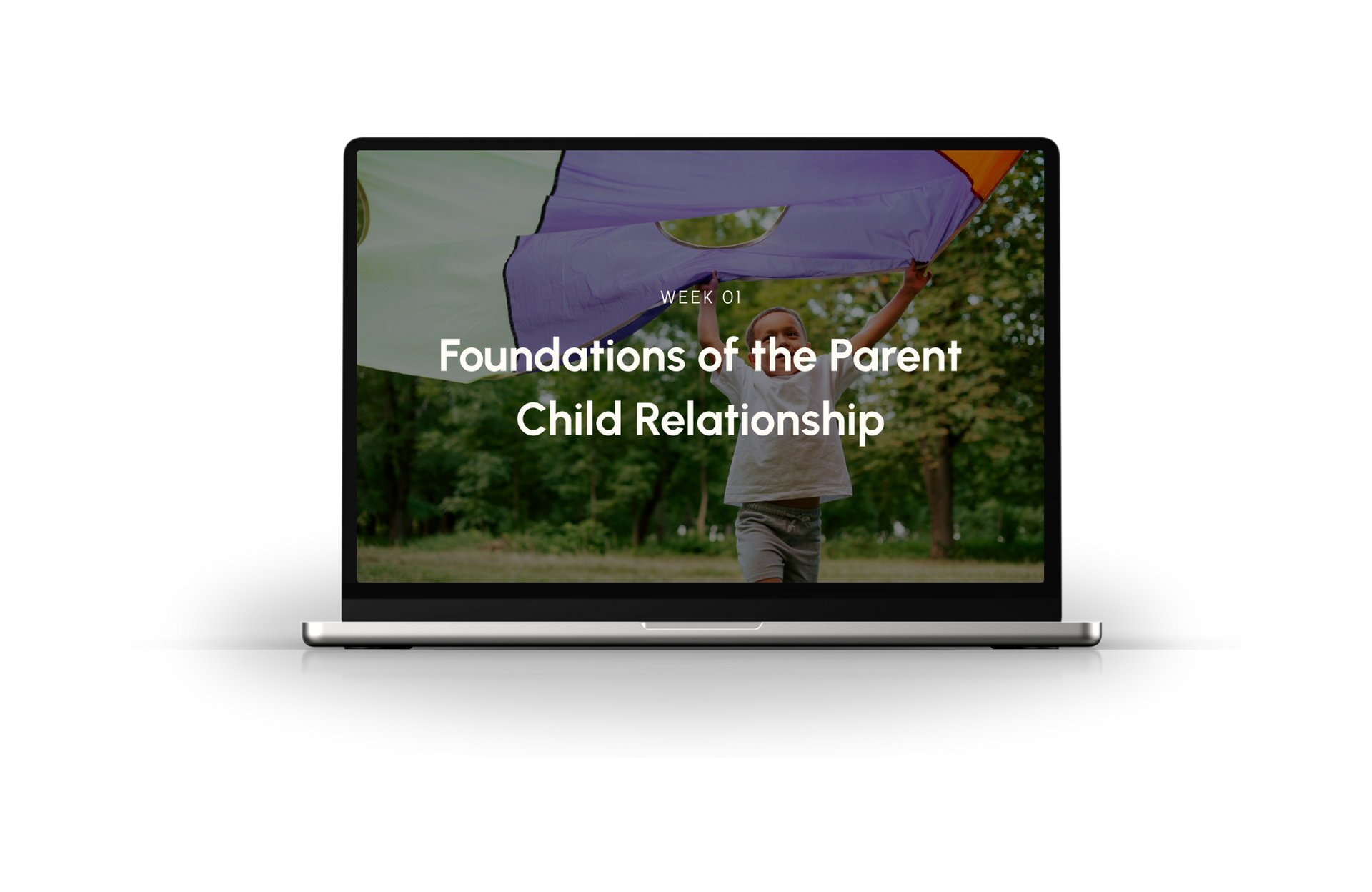
Week 01: Foundations of the Parent Child Relationship
Learn why connection is the foundation of behavior change, and why strengthening the relationship shifts everything else.
Week 02: Being With Your Child Emotionally
Discover the powerful “being with” skill that helps your child feel seen and regulated without you fixing, correcting, or lecturing.
Week 03: Special Play Time Do’s and Don’ts
Master the structure of child led play and learn the subtle shifts that turn 30 minutes of play into cooperation all week long.
Week 04: Limit Setting with the A C T Model
Learn how to hold firm, calm boundaries that reduce escalation instead of triggering it.
Week 05: Why and When Limits Matter
Understand why consistent, neutral limits create emotional safety and why children relax when you lead steadily.
Week 06: Choice Giving 101 and Common Play Challenges
Use choice giving the right way so you reduce power struggles instead of inviting negotiation.
Week 07: Esteem Building Responses
Replace surface praise with language that strengthens your child’s internal confidence and emotional regulation.
Week 08: Encouragement Versus Praise
Learn the subtle but powerful difference that builds resilience instead of dependence on approval.
Week 09: Advanced Limit Setting Beyond Play Time
Apply your skills to real life moments like sibling conflict, bedtime resistance, and school stress, without reverting to old patterns.
Week 10: Integration and Next Steps
Solidify the tools so you leave steady, confident, and equipped to handle big emotions long after the program ends.
This is for:
- Parents who feel overwhelmed, guilty, and reactive — and want to feel confident and connected instead.
- Parents who are tired of short term fixes and are ready to build long term emotional resilience in their child.
- Parents who want to understand what their child’s behavior is communicating instead of constantly correcting it.
- Parents who are open to structured play as a powerful tool for connection and regulation.
- Parents who are ready to do the work inside a supported 10 week container and want real change, not quick hacks.
Frequently asked questions
What is CPRT and how is it different from regular parenting classes?
CPRT (Child-Parent Relationship Therapy) is a research-backed, play-based program that strengthens the bond between parent and child — not just teaching rules, but rebuilding connection. Unlike general parenting courses, CPRT is rooted in child-centered play therapy principles and is specifically designed for children ages 2–10 showing behavioral, emotional, or attachment challenges.
Can I take CPRT parenting classes online?
Yes. Our CPRT and family support classes are available fully online, so you can join from home — no commute, no childcare scramble. Sessions are live and structured, not just pre-recorded videos.
Who are these online parenting classes for?
Answer: These classes are for parents, caregivers, and grandparents of children ages 2–10 who want to improve their relationship with their child, navigate behavioral challenges, or get structured family support. No prior experience with therapy is needed.
How long does the CPRT program take?
The standard CPRT format runs 10 weekly sessions of about 2 hours each. You'll also practice a 30-minute at-home play session with your child — this is where the real transformation happens.
“But what if I’ve already tried everything and nothing worked?”
This program is different because we are not layering on more behavior strategies. We are shifting the relationship underneath the behavior. Most parents I work with are not failing — they have simply never been taught how to respond to a dysregulated nervous system. When that shifts, everything else begins to shift too.
“What if my child’s behavior is too extreme for something like this?”
Big emotions are exactly what this model was designed for. CPRT was created for children who struggle with regulation, defiance, anxiety, trauma, and power struggles. This is not about having a “mild” situation — it is about learning how to respond steadily when emotions are big.
“What if I don’t have time for this?”
You are committing to one 30 minute play session per week and one live call. That is it. The rest of the material can be viewed ar your pace and you’ll have lifetime access. This is not about overhauling your life. It is about practicing one skill at a time in a way that fits into real parenting. Small, consistent shifts create lasting change.
“What if I can’t make it to the live calls?”
No worries, if you miss a live coaching call, you will still have access to Michelle by email or text to ask any questions you may have, and we’ll make sure you feel fully supported throughout the program.


I’m Michelle Holdeman, a licensed therapist, registered play therapist, and founder of New Connections Mental Health, a group practice specializing in children, teens, and families.
For years, I’ve helped parents navigate big emotions, power struggles, and disconnection inside my therapy office.
I created this program because I saw how powerful relationship based play work was, and I wanted more families to access it beyond weekly therapy.
I believe parents are the most powerful agents of change in their child’s life.
And I’m here to help you step into that role with clarity and steadiness, without feeling overwhelmed or alone.
If you’ve been waiting for a sign that there’s another way to parent through big emotions — this is it.
You don’t need to keep bracing for the next meltdown.
You don’t need to keep wondering if you’re messing this up.
You don’t need to keep trying to fix behavior without feeling connected.
It’s time to lead your home with calm confidence, and this is where you begin.
The first CPRT Online cohort begins August 3rd, and enrollment closes on July 31st so we can keep the group intentional and supported.
Because this program has just launched, I’m offering a founding beta rate of
$497. That’s $500 off the full investment of
$997.
This beta pricing will not be offered again once this cohort is complete.
If you’re ready to stop surviving your child’s big emotions and start responding with clarity and connection, I’d love to support you inside.
The calmer, more connected home you want?
It starts with one decision. But the next step is up to you.
Apply to the program and book a clarity call here
Contact Us
We will get back to you as soon as possible.
Please try again later.
Parent Coaching Disclaimer
The parent coaching services offered on this page are educational, skills‑based, and supportive, and are intended to help caregivers strengthen their parenting approach. Coaching is not psychotherapy, and it should not be considered a replacement for mental health treatment for you or your child.
Participating in coaching does not create a therapist–client relationship and does not include clinical assessment, diagnosis, or therapeutic intervention. Coaching focuses on guidance, strategy, and practical tools rather than mental health treatment.
If at any point it becomes clear that therapy or another form of clinical support would be beneficial, I will provide appropriate referrals or recommendations for licensed mental health professionals in your area.