Parenting Classes: A Practical Guide to the Types, the Skills, and Choosing What Actually Works
If you are a parent feeling behind before you have even started, you are not doing anything wrong.
Parenting classes range from a single afternoon workshop to a structured program that changes how you and your child relate to each other for years. Some are built for a specific crisis. Others are built for the slow, ordinary work of raising an emotionally healthy kid. The right one depends entirely on what your family needs right now, and picking the wrong one wastes the two things you have least of: time and patience.
This guide breaks it all down. You will find a side by side comparison of the main types, a clear look at the skills these classes actually build, honest answers to the questions parents ask most, and a practical way to decide where to start.
In case you are new here, we're New Connections Mental Health, a team of therapists founded by Michelle Holdeman, and we serve as your parent coaching partner for families. We specialize in play therapy, child-parent relationship training, and helping parents move from constantly reacting to genuinely understanding what is going on beneath their child's behavior. If you have landed here because parenting feels harder than you expected, that is exactly the conversation we have every day.
The main types of parenting classes
Before you compare providers or prices, it helps to understand that "parenting classes" is an umbrella term covering several very different things. Some are one-to-one and tailored to your family. Others are group based. Some are court ordered and time limited. Others are open ended and relationship focused. Here is the essential picture at a glance, and the sections that follow go deeper into the ones that matter most for emotional and behavioral growth.
- Individual parent coaching — What it is: one-to-one guidance where a therapist helps you with your specific child, your specific home, and your specific stuck points. Best for: parents who want strategies tailored to one particular child or behavior rather than general tips. Format: private sessions, in person or online, scheduled around your family. Who leads it: a licensed therapist or trained parent coach. What you walk away with: a plan built around your actual child, adjusted as things change.
- Parent group coaching (CPRT) — What it is: a structured, evidence-based program where a small group of parents learn play-based skills to strengthen the parent-child relationship. Best for: parents who want a proven framework plus the support of others who understand. Format: weekly group sessions over roughly ten weeks, with practice at home in between. Who leads it: a licensed therapist trained in Child-Parent Relationship Therapy. What you walk away with: a repeatable set of skills and a real shift in how your child connects with you.
- Co-parenting classes — What it is: classes focused on raising children across two households with less conflict and more consistency. Best for: separated or divorcing parents, and families a court has asked to take a class. Format: short courses, often four to twelve hours, in person or online. Who leads it: anything from court-approved providers to licensed clinicians. What you walk away with: tools for communication and boundaries, plus a certificate when required.
- Online / self-paced classes — What it is: video or module based courses you complete on your own schedule. Best for: parents who need flexibility, a certificate, or a low-cost starting point. Format: self-paced or live-virtual, from a single session to a full curriculum. Who leads it: ranges widely, from national programs to individual educators. What you walk away with: general knowledge and, for many programs, a completion certificate.
What parenting classes teach
They are skills training, in the same way a coach teaches an athlete a movement and then watches them practice it. The point is not information. Most parents already know they should stay calm and listen more. The point is building the actual capacity to do those things in the moment your child is melting down on the kitchen floor and you are running on four hours of sleep.
Strong parenting skills training focuses less on managing behavior from the outside and more on understanding what drives it. When you can read the need underneath the outburst, you respond to the real problem instead of the noise on the surface. That is the shift that makes everything else stick.
The core skills you build
Different programs emphasize different things, but the skills that carry across nearly all quality parenting classes look like this.
- Reading the emotion under the behavior: recognizing that a tantrum is often overwhelming, not defiance. You respond to the actual need, so the behavior settles faster.
- Staying regulated yourself: noticing your own rising frustration and steadying it before you react. Kids borrow calm from the adults around them, so your regulation becomes theirs.
- Setting limits with warmth: holding a clear boundary without yelling or shaming. Children feel both safe and respected, and the limits actually hold.
- Reflective listening: naming what your child seems to feel before jumping to solutions. Your child feels understood, which lowers the intensity of big feelings.
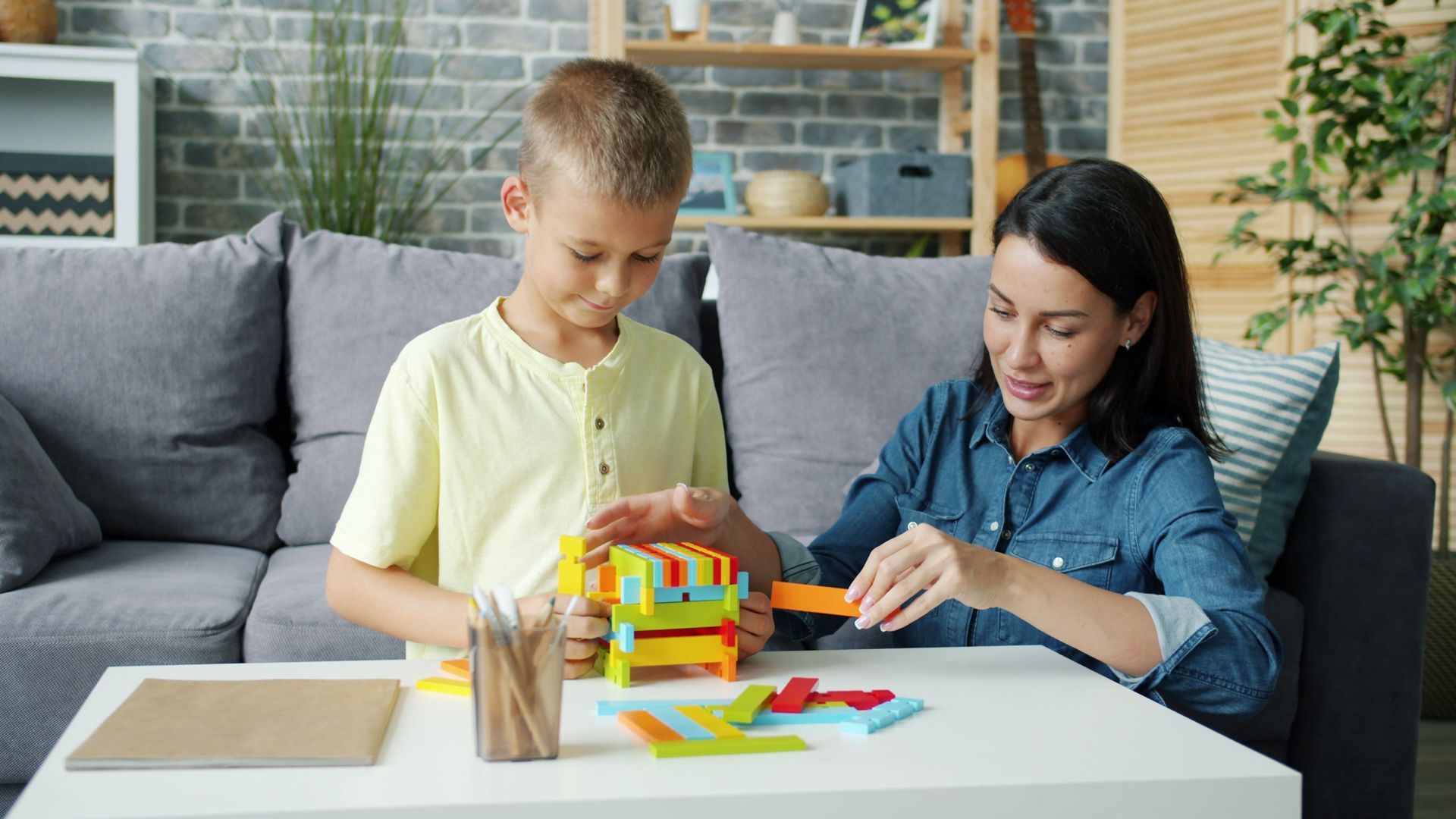
- Play-based connection: using unstructured play to strengthen the bond, especially with younger kids. Connection is what makes cooperation possible, and play is how young children speak.
- Repairing after conflict: coming back after a hard moment to reconnect rather than pretending it did not happen. Repair teaches kids that relationships survive rupture, which builds resilience.
Of all six, "setting limits with warmth" is usually the one parents ask about most, because it is the hardest to picture until you see it written out. If that is the skill giving you the most trouble at home, our guide on setting boundaries for children breaks it into age-specific scripts you can start using tonight.
Do parenting classes really work?
This is a fair question, and the honest answer is yes, with a condition. Decades of research on structured, evidence-based parenting programs show real reductions in child behavior problems and real gains in parent confidence. But the classes that work share a few features, and the ones that disappoint tend to be missing them.
The programs that produce lasting change are the ones that give you skills to practice, not just concepts to absorb. They include feedback, so you are not guessing whether you are doing it right. And they treat you as the expert on your own child while adding the clinical knowledge you do not have. A weekend of slides you forget by Tuesday will not change much. A program that has you practicing a new response, coming back to talk through how it went, and adjusting as you go is a completely different experience.
The other quiet factor is fit. A class built for co-parenting after divorce will not do much for a parent whose six-year-old is having daily meltdowns, and a play-based attachment program is not what a court is asking for. Matching the class to the actual problem is most of what determines whether it works.
When should you start parenting classes?
Most parents wait longer than they need to, usually because they believe they should be able to handle it alone. There is no rule that says things have to reach a crisis first. In fact, the earlier you start, the more you are working with prevention rather than repair.
That said, a few signs suggest it is time. If the same conflict keeps repeating no matter what you try, if you are relying on yelling or punishment more than you want to, if your child's behavior is affecting school or friendships, or if you simply feel like you are constantly reacting instead of parenting on purpose, those are all reasonable reasons to reach out. You do not need to justify it with a diagnosis or a disaster. If anger and meltdowns are the pattern showing up most in your house, our roundup of anger management activities for kids is a good place to start building tools before your first class even begins.
It is also worth saying that wanting support is not the same as failing. The parents who seek this out are usually the ones already working hard. Adding skills to that effort is what changes the outcome.
What child-parent relationship training is and why it works
One of the most effective approaches we use falls under child-parent relationship training, often shortened to CPRT. Instead of teaching you to manage your child from the outside with charts and consequences, it teaches you to become the agent of change through the relationship itself. It rests on a simple, powerful idea: play is a child's natural language, and the parent-child bond is the strongest tool you have for helping a child regulate, feel safe, and grow.
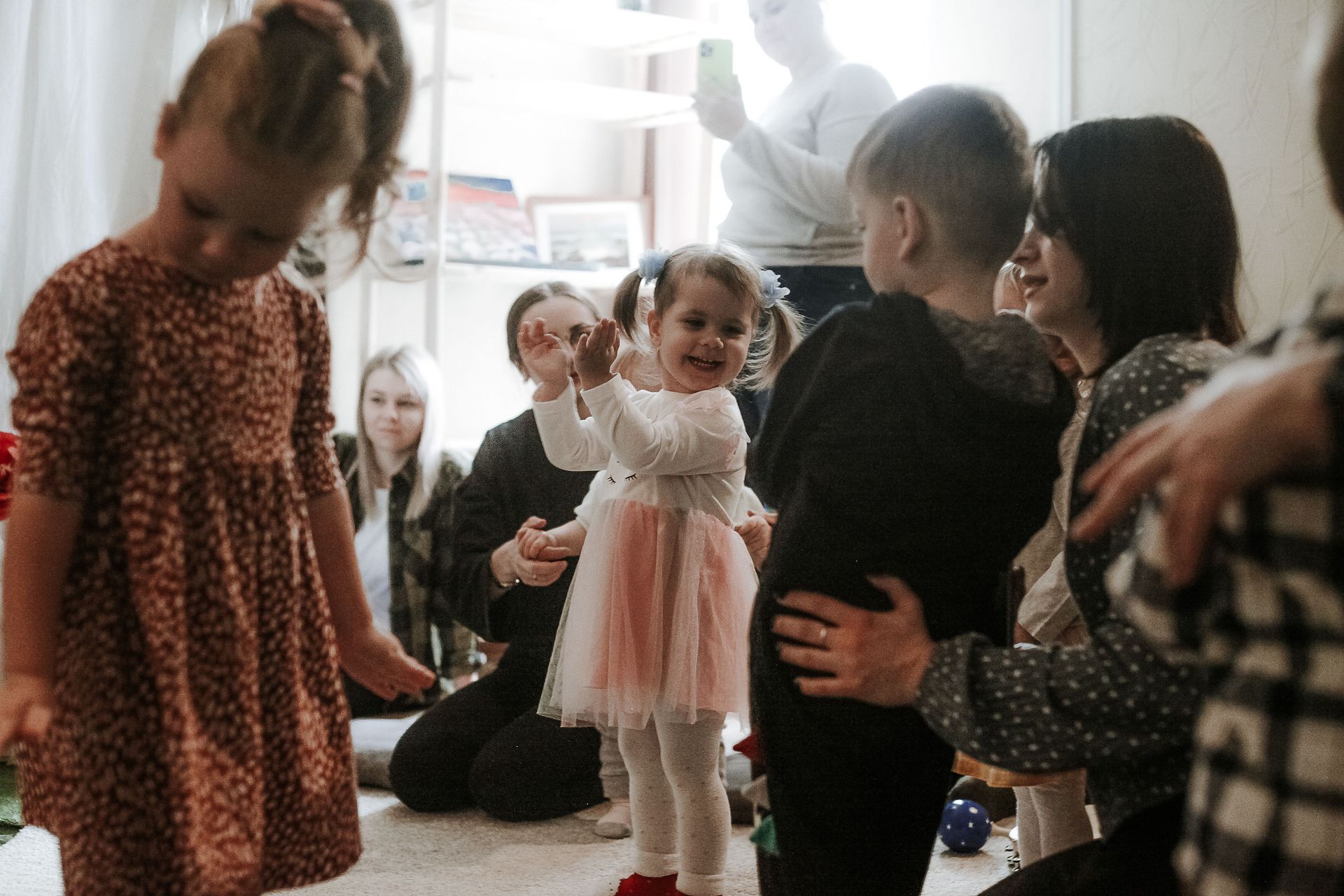
In practice, CPRT usually runs as a small parent group over about ten weeks. You learn a specific set of skills, most notably a structured, weekly special playtime with your child, and you practice them at home between sessions. The group brings the skills into your actual living room, where the change needs to happen, and it surrounds you with other parents working through the same things. For families who want this kind of relationship-first work, our online parent coaching program is built around exactly these methods.
What makes this approach land is that it does not ask you to become a different parent. It gives you a way to use the relationship you already have more intentionally. Parents are often surprised by how quickly a child responds when the connection strengthens, because so much difficult behavior is really a bid for attunement that has not been met yet.
Parent coaching and parent support groups: which one fits your family?
Individual parent coaching is the right choice when your situation is specific and you want strategies built around your child. If your seven-year-old's anxiety looks nothing like the examples in the parenting book, or your teenager has shut down in a way that generic advice does not touch, one-on-one coaching lets a therapist tailor everything to your reality and adjust as your child changes. It is focused, private, and moves at your family's pace.
Parent support groups do something coaching cannot. They remind you that you are not the only one. There is a particular kind of relief that comes from sitting with other parents who describe the exact scene you lived through last night and nod instead of judging. The best groups combine that support with real skill building, so you leave with both connection and tools. Many families find the two formats work well together, using coaching for the specifics and a group for the steadiness and the community.
If you are not sure which fits, that is a normal place to start, and it is a conversation worth having with a therapist before you choose.
Do online parenting classes work as well as in person?
Online parenting classes have become one of the most searched options, and for good reason. They remove the barriers that stop a lot of parents from ever starting: driving across town after work, finding childcare, fitting a fixed class time into an already impossible schedule. For many families in rural areas, where the nearest in-person program might be an hour away, online is not a compromise. It is the only realistic option, and a good one.
The research on quality is encouraging. Well-designed online and virtual parenting programs can produce outcomes comparable to in-person ones, as long as they include the same active ingredients: real skill practice, feedback, and a way to ask questions rather than just watching videos. The difference is not the screen. It is whether the program is interactive or passive. A live-virtual group where you practice and get coaching work. A folder of recorded lectures you half-watch does not do much no matter where you sit.
For parents balancing work, distance, and the general chaos of family life, a live online program often gives you the best of both: the flexibility of home and the accountability of a real therapist watching your progress.
Where co-parenting classes fit in
Co-parenting classes are a specific branch of this world, built for parents raising children across two homes, whether after a separation, a divorce, or simply as parents who were never together. Some families take them by choice. Others are asked to by a court, in which case a completion certificate matters.
The heart of a good co-parenting class is conflict, specifically how to lower it and how to keep children out of the middle of it. You learn to communicate about the kids without reopening old wounds, to hold consistent expectations across two households, and to protect your children from loyalty binds that ask them to choose sides. Even when parents deeply disagree, children do far better when the adults can cooperate on the things that affect them. That is the skill these classes are really teaching.
You don't have to navigate parenting classes alone
If you have read this far, you are already doing the part that matters most, which is taking your child's needs and your own instincts seriously enough to look for real help. Choosing among parenting classes should not feel like another test you might fail. It should feel like finally getting a knowledgeable person in your corner who can point you toward what actually fits your family.
We serve families across western Kansas, offering online parenting classes and family therapy in Hays, KS, along with virtual support for parents in Great Bend and Salina, so distance never has to be the reason you go without support.

Hi! I'm Michelle Holdeman
Licensed clinical social worker and founder of our group therapy practice for kids and teens
I help overwhelmed parents, sensitive kids, and emotionally intense teens move from daily meltdowns to deeper connection—using play-based, trauma-informed therapy that truly works. At New Connections Mental Health, we create space for healing, growth, and lasting change—one session, one family, one feeling at a time.