5 positive parenting techniques that work for kids with big emotions
A child's emotional storm system runs at full power years before the brakes are installed. The amygdala, which sounds the alarm, is essentially online at birth. The prefrontal cortex, which talks the alarm down, is still under construction well into the twenties. So for roughly two decades your child has a full-volume siren and a very small hand on the dial.
Which is why most positive parenting techniques fail the moment things get loud. They were written for a calm child. Your child, in the moment you actually need help, is not calm, and neither are you.
These five are different in that they are built for the storm rather than the sunshine. They are the ones we teach parents first, they are unglamorous, and they hold up on a Wednesday when everyone is tired and the homework folder is missing.
In case you are new here, I am Michelle Holdeman, founder of New Connections Mental Health. We are a team of child and family therapists, and our parent coaching program was built for exactly this kind of kid. Big feelings, big heart, and a parent who is starting to wonder whether they are making it worse. You are almost certainly not.
What are positive parenting techniques?
Positive parenting is not the absence of discipline, and it is not a promise that your child will comply if you are nice enough. That misunderstanding has done real damage, because parents try it, watch their child escalate, and conclude that firmness is the only thing that works.
The actual premise is narrower and more useful. Children behave better when they feel securely connected, when expectations are clear and consistent, and when the adult stays regulated. Discipline still happens. Limits still exist and they are held. What changes is that you stop trying to make your child feel bad in order to make them behave better, because feeling bad does not build the skill you actually want.
The other thing worth naming is that positive parenting is a long game. Punishment often produces faster short-term compliance. That is why it is so seductive at 7pm. What it does not produce is a child who can regulate themselves when you are not in the room, which is the entire goal.
What are the five positive parenting techniques that work with big emotions?
Each of these is small. That is deliberate. Parents who try to overhaul everything on a Sunday are back to old patterns by Wednesday, and then they carry the extra weight of having failed at something. Pick one. Run it for two weeks. Then add the next.
Technique one: name the feeling before you address the behavior
When your child is flooded, the part of their brain that processes reasoning has effectively gone offline. Anything you say that begins with "you know better than to" is being delivered to an empty room. Naming the feeling is not a nicety. It is what brings the reasoning part back.
It sounds like this. "You are furious that we have to leave." Not "I know you're upset, but we talked about this." The word "but" cancels everything in front of it, and your child hears only the second half. Say the feeling, stop, and let it sit for a beat that will feel far too long.
Parents worry this rewards the outburst. It does not. You are not agreeing that screaming is acceptable. You are telling your child that their internal experience is real and legible, which is what lowers the volume enough for the limit to be heard. The limit comes next and it does not soften.
A quiet prerequisite here is that your child needs some vocabulary to work with, and most children have far less of it than adults assume. If naming feelings keeps landing flat in your house, our piece on helping children understand and express their feelings covers how to build that vocabulary during calm moments so it is available during loud ones.
Technique two: hold the limit and the connection at the same time
This is the technique that separates positive parenting from permissiveness, and it is the one most parents have never actually seen modeled.
The shape is three parts. Acknowledge the feeling, state the limit plainly, offer what is allowed. "You really want to keep playing. The tablet is done for today. You can pick a book or come help me with dinner." Warm face, steady voice, no negotiation, no lecture, no explanation for the fourth time.
The hard part is that your child will often get louder right after a limit is held well. Parents read that escalation as evidence the technique failed. Usually it is evidence it worked, because your child just learned the limit is real and is protesting accordingly. Protest is not failure. Protest is the sound of a boundary landing.
If the limits themselves are where things break down in your house, rather than the delivery, our practical guide to setting boundaries with children goes deeper on choosing which ones are worth holding in the first place.
Technique three: offer the choice you can live with either way
Children with big emotions are very often children with a high need for control, and a great deal of daily conflict is really a fight over autonomy dressed up as a fight over shoes.
Giving genuine choices drains that pressure. Genuine is the operative word. "Do you want to put your coat on or do you want to be cold" is not a choice, it is a threat with a costume on, and children detect this immediately. Real ones sound like: which shoes, teeth first or pajamas first, do you want to walk out or be carried out, five more minutes or two more minutes.
Offer two options, both of which are fine with you, and then stop talking. If your child invents a third option, you calmly restate the two. The goal is not to win. It is to let your child spend their need for control on something that costs you nothing.

Technique four: repair out loud after you lose your cool
You will lose your temper. Every parent we work with does, including the ones who do this for a living. What matters far more than whether you rupture is whether you repair.
Repair has a specific form. Name what you did, take responsibility without excuses, and separate it from your child's worth. "I yelled at you. That was not okay and it was not your fault. I was frustrated and I handled it badly. I am sorry." Then stop. Do not append "but if you had listened the first time," which converts an apology into a second lecture and teaches your child that apologies come with invoices.
This one does more emotional work than the other four combined. A child who watches an adult own a mistake without collapsing into shame is learning something they will use for the rest of their life. It also, quietly, gives you permission to be a human being in your own house.
Technique five: protect one block of child-led play every week
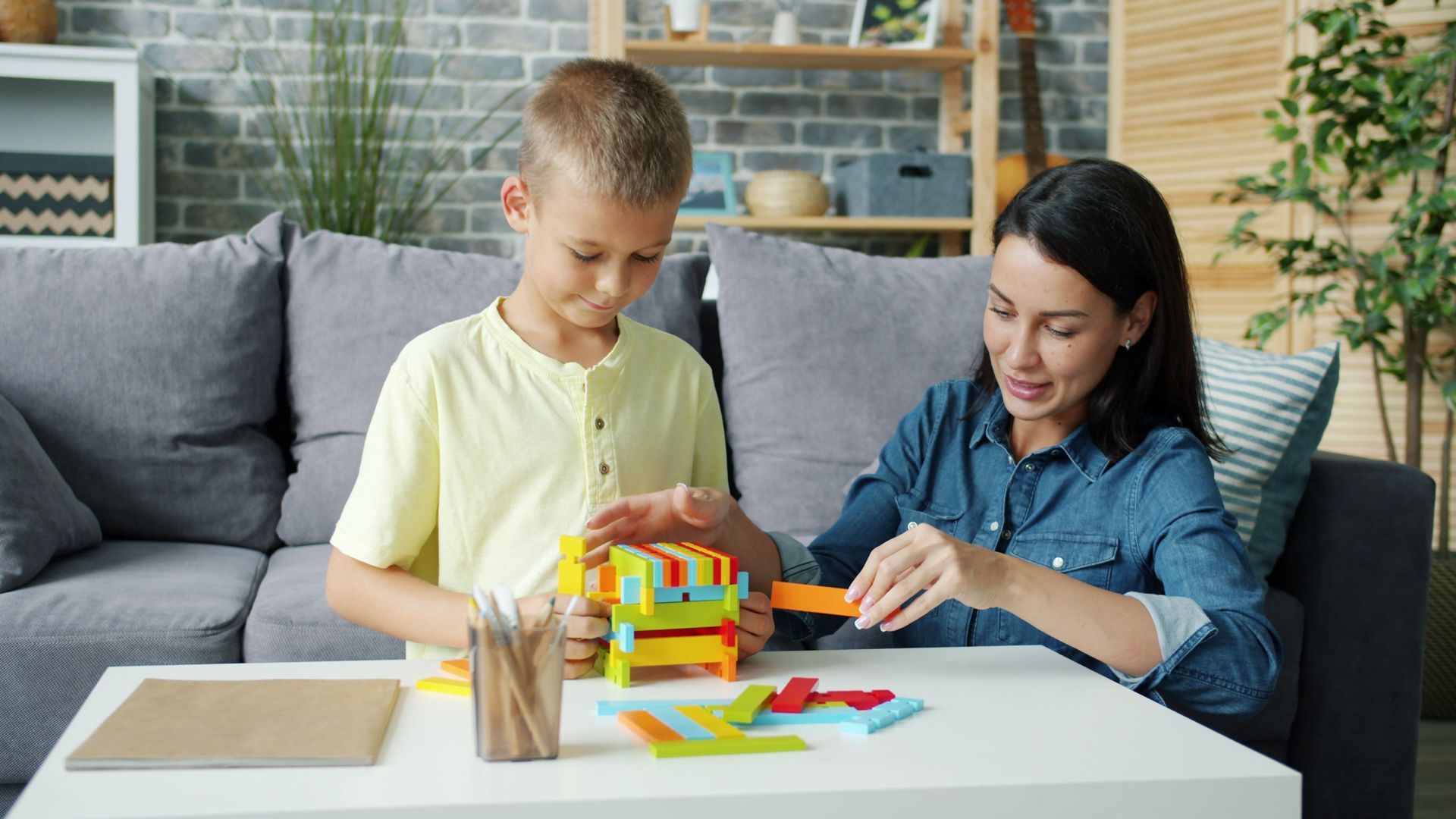
Thirty minutes, one child, no phone, no siblings, no teaching, no questions, no correcting. Your child chooses the activity and directs it. You narrate what you see and follow their lead. That is the whole instruction and it is much harder than it sounds.
Almost every parent breaks it in the first ten minutes by asking a question or suggesting an improvement. Both of those move you back into the driver's seat, which is exactly what the exercise removes. Your only job is to be genuinely, boringly present.
How do you discipline a child without yelling or hitting?
By making the discipline about what happens next rather than about how bad your child feels now.
Practically, that means natural and logical consequences delivered without heat. The consequence is connected to what happened, it is proportionate, it is stated once, and it is followed through. Markers on the wall means the markers go away and you help clean it. That is it. No added lecture, no added disappointment, no revisiting it at dinner.
Fix the three windows, not just the moment
It also means fixing the conditions rather than only the behavior. Most yelling in a house is concentrated in about three predictable windows. Morning, the hour before dinner, and bedtime. Change the structure of those three windows and the yelling drops before anyone practices a single new phrase.
Concretely, that can mean laying out clothes the night before so the morning has one fewer negotiation in it, moving the snack earlier so the 5pm crash lands with food already in the room, or shifting the hardest task away from the hour when everyone is emptiest. None of this is parenting advice in the usual sense. It is scheduling, and it outperforms willpower every time.
Have one rehearsed move for the edge
When you do get to the edge, the plan matters more than the intention. Decide in advance what you do when you feel it rising. Leave the room and drink a glass of water. Sit down on the floor, which physically slows you. Say one prepared sentence out loud. Willpower is not available at that moment. A rehearsed move is.
Do positive parenting techniques work for toddlers too?
They do, with two adjustments. Fewer words and more body.
A toddler cannot follow a three part sentence about feelings, limits, and alternatives. Cut it to four or five words and repeat the same words each time. "You're mad. No hitting. Hands are for playing." Get low, use your hands to gently stop the behavior while you say it, and expect to say it several hundred more times before it takes hold.
Choices work beautifully at this age and can defuse most of the daily standoffs. Repair works too, and matters more than parents assume, because a two year old absolutely registers the difference between a parent who softens afterward and one who stays cold. Child-led play is the easiest sell of all, since toddlers are already doing it and simply want you to stop directing. If you want concrete things to actually do in that half hour, we put together 30 play-based regulation activities for toddlers that require almost nothing you do not already have in the house.
The thing to lower is your expectation of speed. With an eight year old you may see change in two weeks. With a two year old you are laying track for something that arrives in months, and the behavior is not the measure. The relationship is.
Is positive parenting the healthiest parenting style, or just the trendiest?
The research consensus for decades has pointed to authoritative parenting as the approach associated with the best outcomes for children. High warmth and high expectations, together. Not permissive, which is warm without structure, and not authoritarian, which is structure without warmth.
Positive parenting, done properly, is authoritative parenting with a better bedside manner. That is the whole story. It is not new and it is not a trend. What is trendy is a distorted version circulating online in which parents are told to never raise their voice, never impose a consequence, and endlessly explain, which produces exhausted parents and children with no reliable edges.
So if you have tried "positive parenting" and found it did not work for your intense kid, it is genuinely worth asking whether you were handed the version with the limits removed. In our experience that is what happened, and adding structure back does not betray the approach. It completes it.
What if your child's biggest feelings stopped feeling like something you had to survive?
Loving a child with enormous emotions is not a problem to be embarrassed about. It is a demanding job that most parents are doing without training, without backup, and often while being quietly judged by people who have easier children and think it is because of something they did.
We work with families across western and central Kansas online, including our parenting classes in Hays, KS and the families who join us from Dodge City and Ford County.

Hi! I'm Michelle Holdeman
Licensed clinical social worker and founder of our group therapy practice for kids and teens
I help overwhelmed parents, sensitive kids, and emotionally intense teens move from daily meltdowns to deeper connection—using play-based, trauma-informed therapy that truly works. At New Connections Mental Health, we create space for healing, growth, and lasting change—one session, one family, one feeling at a time.